My High School Gifted English teacher was passionate about semantics – the meaning of words as intended by the writer or speaker. All words have meaning, of course. But, the meaning of the word may vary by degree depending on how the word is utilized, who is using it, the mode of communication, and how it’s being received by the hearer or audience.
She also taught us about Alfred Korzybski, a Polish-American scholar and pioneer in the field of General Semantics, who used the terms sanity, insanity, and unsanity to describe how we perceive reality. Just as a word can have varied and nuanced meaning, and thus can carry both an intended meaning while being potentially misunderstood by the hearer, there is likewise a broad spectrum of how we each individually perceive reality.
There’s only one reality, but there are also as many perceptions and interpretations of reality as there are individual persons.
Though it’s been a long time since I was a High School English student, the idea of sanity vs. unsanity vs. insanity has stuck with me. Though I’m sure I’ve forgotten much of what my teacher hoped to impress upon us, I recall her defining sanity as a 100% accurate perception of reality, insanity as a complete and total distortion or absence of reality, and unsanity as reality distorted by differing perceptions of reality.
My teacher said, more or less, no one is sane. No one. A few folk are insane, needing treatment and possibly to be locked-up. And, the vast majority of seemingly normal people are 100% unsane.
Unsanity – a distortion of reality – is the result of myriad influences in our lives. Perhaps you interpreted some life experience – traumatic or not – erroneously, but continue to filter all similar experiences through that same misperception. Perhaps you were raised in a particular culture, or household, or religion, where you formed a particular value system and world view. Perhaps your life experience has been more narrow, with limited exposure to alternative ideas and life-experiences, or conversely with broader exposure to diversity. Perhaps your education has either narrowed or broadened your views. Perhaps you are a person of faith, or not. Perhaps your natural psychological disposition causes you to be more optimistic or pessimistic, more feeling or thinking, more intuitive or sensing, more pragmatic or more adventurous. Perhaps you’ve experienced life as a place of privilege or disadvantage. Perhaps your life experience has been more stable or unstable, more safe or unsafe. Perhaps your sources of information are more narrow or more broadly diverse. Perhaps you’ve been more nurtured or more neglected. Perhaps you were raised as the only child of a single parent vs. one of many in a larger “traditional” family. Perhaps you are gay or straight, male or female, cisgender or transgender, majority or minority, abled or disabled, strong or weak, insider or outsider. I could go on and on and on. All of these possibilities, and more influence, how we see and understand reality.
In other words, while sharing the same reality, we’re all a bit unsane in the ways we perceive and interact with reality. For instance…
I’m an only child, raised by married, heterosexual parents, who provided a safe, nurturing and economically-stable home. Our family was traditionally moral, but only moderately religious. My parents expected me to go to college, and provided the opportunity. I was provided opportunities to explore hobbies and interests.
I attended public schools, shortly after desegregation, while still living in a historically-segregated city.
I’m a tall, white, Southern male.
I’m part of Generation X, and vividly recall historic moments like the Vietnam War, Nixon’s resignation, the Iran hostage crisis, the Cold War and fears of nuclear annihilation, the invention of MTV, the fall of the Berlin Wall, the Space Shuttle Challenger explosion, Desert Storm, etc., etc.
I received my degrees and certificates from a public university, a liberal-leaning “Ivy League” graduate school (a bastion of Political Correctness!), an Evangelical seminary, and a Roman Catholic college.
I’m happily married, for 30+ years, to my best friend, who happens to be an identical twin – an entirely different experience than being an only child! We are the parents of an adult daughter and son.
I’ve been a mainline Christian Pastor for my entire adult life.
I’ve had the opportunity to travel beyond our borders, and experience a diversity of cultures and nationalities, spending considerable time developing relationships with culturally indigenous Mayans in Guatemala.
I’m a perpetual student, always researching, always reading, always seeking to hear from diverse perspectives.
I am, by nature, introverted, creative, empathic, feeling, and introspective.
I’ve endured chronic physical pain and battled anxiety and depression most of adult life.
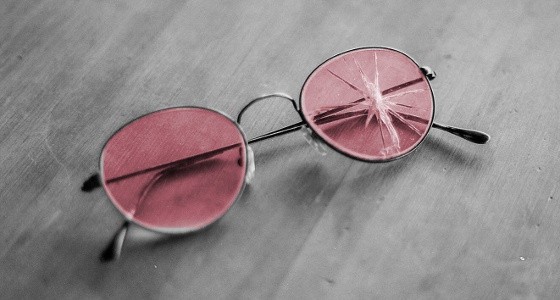
All of these particular life experiences have uniquely shaped how I view the world, and contributed to my personal unsanity. In most ways, I hope my education, experiences, spirituality, and relationships help me see and perceive reality more clearly, more accurately. But, undeniably, I view reality from a particular vantage point, a particular worldview, a particular set of life experiences – some providing clarity and some causing distortion. I’ve never been accused of viewing the world through “rose-colored glasses,” but my glasses are undeniably and uniquely tinted, sharpening my view of some things while distorting or inhibiting my view of others.
By the way, you too are at least as unsane as I am! Maybe more!
So, what’s the point? I’m concerned – VERY CONCERNED – our collective unsanity is strained to the breaking point. For the most part, the unsane share a common ground of mutually agreed upon sanity – laws, traditions, values, etc. So called “moderates” have always been in the majority, with the minority extremes to the right and the left. We’ve always known the extreme right and left unsanes couldn’t and wouldn’t agree with each other. How could they? They see reality in completely different ways. But, there was, for most, a common, “sane” middle-ground.
But, increasingly, the unsane middle is giving way to the growing unsane margins. And, as the middle shrinks, the gulf between the extremes grows and deepens. Take for example recent conversations about the pandemic, between more cautious voices of concern and calls for stricter precautions on one side and Covid-deniers on the other. Or, conversations about race in America, and who is to blame. Or, Congress’ failure to pass another aide bill. Or, even the outcome of the Presidential election and the President’s response, and the support he’s received. Was the election fair and legitimate, resulting in a Biden/Harris victory, which seems to have been scrutinized and verified? Or, was the election actually won by President Trump, as he and his ally’s claim, revealing a nefarious deep state socialist plot to steal the election?
The truth, to me, seems so obvious. The voices I listen to for accurate information and reporting seem entirely reasonable. Reality, from my perspective, seems so clear. Yet, millions of Americans passionately, angrily disagree with me, over matters of proven fact. Or, are they facts? Have I been duped to believe lies?
How do we ever agree on anything at all, or make constructive decisions, or heal our society’s ills, or move forward constructively when we can’t agree on the basic facts of reality? It’s one thing to disagree or have different perspectives on the details, while agreeing on a bigger picture. But, what do we do when we can’t even agree on what picture we’re looking at? Our collective unsanity is on the verge of insanity, and insanity can only lead to chaos!
I don’t have the answers. I’m not smart or sane enough for that. I wish I was! Someone needs to! I desperately want answers for myself and for all of us. I do think we ALL have to grapple with questions like…
What are the truths we will collectively – at least the majority of us – agree on?
Who are the authorities we will collectively trust, even if we don’t always agree with them?
How do confront the misinformation and lies undermining our collective trust and confidence in truth?
What are the factors and causes of the growing rifts in our perceptions of reality, and what can we do to correct them?
Can we stop demonizing and falsely accusing those who view reality differently, and listen, at least for the sake of attempting to understand their perspective?
Where can we find more common ground? Can we?
There was once a time we could respectfully “agree to disagree” on many things. Not any more. And, that’s a problem. A big problem.


 vancerains.com
Leave a reply to avisagomez Cancel reply